← Back to Expertise
Overview
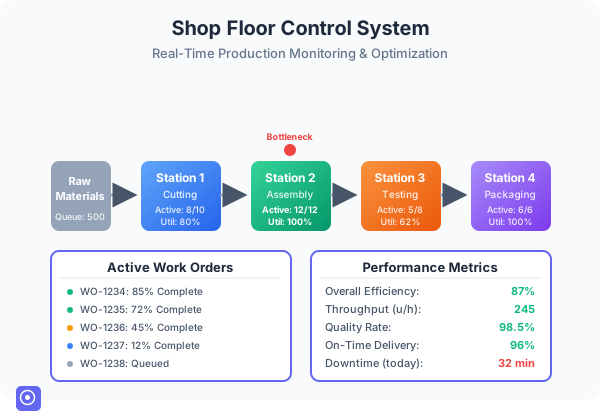
Shop floor control systems bridge the gap between planning and execution, providing real-time visibility, control, and optimization of manufacturing operations. Our solutions leverage advanced algorithms, real-time data, and intelligent decision support to maximize throughput, quality, and resource utilization while minimizing waste and variability.
We implement Manufacturing Execution Systems (MES) with embedded optimization, intelligent dispatching, and adaptive control that respond to dynamic shop floor conditions and drive continuous improvement.
Core Capabilities
Production Tracking & Monitoring
Real-time visibility into manufacturing operations:
- Work Order Management: Release, tracking, and completion of production orders
- Material Tracking: Lot traceability and genealogy from raw materials to finished goods
- Equipment Status: Real-time machine state monitoring (running, idle, down, setup)
- Labor Tracking: Operator activities, time capture, and productivity measurement
- Quality Data: In-process inspection results and statistical process control
Resource Allocation & Dispatching
Dynamic assignment of work to resources:
- Intelligent Dispatching: Algorithm-driven job-to-machine assignment
- Priority Management: Dynamic prioritization based on due dates, constraints, and business rules
- Bottleneck Management: Focus on constraint resources using Theory of Constraints (TOC) principles
- Setup Optimization: Sequencing to minimize changeover time and cost
- Load Balancing: Distributing work across available capacity
Performance Management
Measuring and improving shop floor effectiveness:
- OEE Calculation: Overall Equipment Effectiveness (Availability × Performance × Quality)
- Downtime Tracking: Categorizing and quantifying production losses
- Throughput Analysis: Measuring actual vs. theoretical capacity
- First Pass Yield: Quality performance at each operation
- Cycle Time Analysis: Queue time, processing time, and waiting time breakdown
Quality Management
Ensuring product quality at the point of production:
- Statistical Process Control (SPC) with real-time charting
- Automated quality checks and alerts
- Defect tracking and root cause analysis
- Non-conformance management and containment
- Certificate of Analysis (CoA) generation
Advanced Optimization
Real-Time Scheduling
Adaptive schedule execution and adjustment:
- Dynamic re-optimization as conditions change
- Rush order insertion and expediting
- Machine breakdown recovery and rerouting
- Material shortage handling and priority adjustment
- Schedule deviation alerts and recommendations
Constraint Management
Focusing on bottleneck resources:
- Constraint resource identification using data analytics
- Drum-Buffer-Rope (DBR) implementation
- Buffer management and monitoring
- Constraint protection through upstream control
- Continuous improvement focused on constraint elevation
Setup Reduction
Minimizing changeover time and losses:
- Setup time tracking and analysis
- SMED (Single Minute Exchange of Die) implementation support
- Sequence optimization to reduce setups
- Setup standard work and best practices
- Setup efficiency trending and improvement
Predictive Maintenance Integration
Proactive equipment management:
- Equipment health monitoring and analytics
- Predictive failure detection
- Maintenance scheduling coordination
- Spare parts availability verification
- Planned downtime optimization
Data Collection & Integration
Automated Data Capture
Eliminating manual data entry:
- Barcode/RFID: Material and container tracking
- Machine Integration: Equipment state and production counts
- Sensors: Temperature, pressure, weight, and other process parameters
- Vision Systems: Automated quality inspection
- Operator Terminals: Touch-screen data entry and confirmations
System Connectivity
Integration with enterprise systems:
- ERP Integration: Work orders, BOMs, routing, inventory transactions
- PLM Connection: Product specifications and change management
- SCADA Interface: Process control and automation systems
- WMS Integration: Material movement and warehouse operations
- QMS Connection: Quality management and compliance systems
Analytics & Reporting
Turning data into actionable insights:
- Real-time production dashboards
- Trend analysis and pattern recognition
- Exception alerts and notifications
- Shift and period summary reports
- KPI tracking and performance scorecards
Operational Excellence
Lean Manufacturing Support
Enabling lean principles:
- Visual management and Andon systems
- Pull system and Kanban implementation
- Value stream mapping support
- Waste identification and elimination
- Standardized work enforcement
Six Sigma & Quality
Data-driven quality improvement:
- DMAIC project support with real-time data
- Process capability analysis (Cp, Cpk)
- Control charts and SPC implementation
- Defect reduction tracking
- Root cause analysis tools
Continuous Improvement
Systematic performance enhancement:
- Kaizen event tracking and results measurement
- Best practice identification and sharing
- Improvement opportunity prioritization
- Before/after analysis
- Lesson learned capture
Business Benefits
Higher OEE
Improve Overall Equipment Effectiveness by 10-30% through better control
Real-Time Visibility
Complete transparency into shop floor operations and performance
Better Quality
Reduce defects and rework through in-process control
Faster Throughput
Increase production velocity and reduce cycle times
Lower Costs
Reduce waste, scrap, and inefficiency
Compliance
Full traceability and documentation for regulatory requirements
Implementation Approach
Requirements Analysis
Understanding shop floor needs:
- Current state process mapping
- Pain point identification
- Functional requirements definition
- Technical architecture design
- Integration requirements specification
System Design
Creating the MES architecture:
- Module selection and configuration
- Workflow design and approval routing
- User interface customization
- Report and dashboard design
- Data model and structure definition
Infrastructure & Integration
Building technical foundation:
- Hardware deployment (servers, terminals, sensors)
- Network infrastructure and connectivity
- System integration and interface development
- Data migration and validation
- Security and access control setup
Deployment & Support
Rolling out the solution:
- Phased implementation by area or product line
- User training and certification
- Go-live support and stabilization
- Performance monitoring and tuning
- Ongoing support and enhancement
Industry Applications
- Automotive: High-volume discrete manufacturing with complex assemblies
- Electronics: PCB assembly and semiconductor fabrication
- Pharmaceutical: Batch manufacturing with strict regulatory requirements
- Food & Beverage: Process manufacturing with traceability and safety compliance
- Aerospace: Low-volume, high-complexity manufacturing
- Medical Devices: Quality-critical manufacturing with FDA compliance
- Metals & Mining: Continuous process control and optimization
Key Metrics
- OEE (Overall Equipment Effectiveness): Availability × Performance × Quality
- Throughput: Units produced per time period
- Cycle Time: Time from order release to completion
- First Pass Yield: Percentage of units passing without rework
- Schedule Attainment: Percentage of planned production achieved
- Labor Efficiency: Standard hours vs. actual hours worked
- Downtime: Unplanned and planned equipment downtime
Technology Trends
Emerging capabilities in shop floor control:
- IIoT Integration: Industrial Internet of Things for enhanced connectivity
- AI/ML: Predictive analytics and intelligent decision support
- Digital Twin: Virtual models for simulation and optimization
- Augmented Reality: AR-assisted work instructions and maintenance
- Edge Computing: Local processing for real-time response
- Cloud MES: Scalable, multi-site deployment models
Get Started
Transform your shop floor operations with intelligent control systems that drive efficiency, quality, and agility. Contact us to discuss how our shop floor control solutions can optimize your manufacturing execution.
Email: info@l3v.solutions
 L3V Solutions